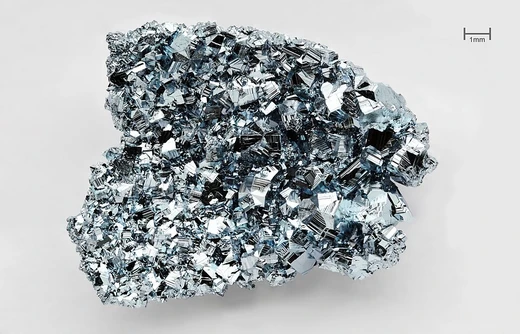
Phosphorus
Often cited as the first element discovered not known in antiquity, essential to life.

Phosphorus is a chemical element with symbol P and atomic number 15. It is a highly reactive element, though white phosphorus is found in trace amounts in nature, such as in volcanic fumaroles and some meteorites.
- symbol
- P
- atomic_number
- 15
- discovered_by
- Hennig Brand
- common_allotropes
- white phosphorus, red phosphorus
- primary_use
- phosphate-based fertilisers
- stable_isotope
- 31P
Lore & Background
He experimented with urine, boiling it down to a paste and distilling it at high temperature, obtaining a white, waxy substance that glowed in the dark and burned brilliantly. He named it phosphorus, from the Greek word for 'light-bearer' (phosphoros), which referred to the morning star (Venus); the later embellishment 'phosphorus mirabilis' is not historically recorded as his exact naming—he called it 'phosphorus' or 'cold fire.' Brand initially kept the method secret but later sold the recipe to Johann Daniel Kraft, who toured Europe with it. Robert Boyle later improved the process and published the method, and his assistant Ambrose Godfrey-Hanckwitz turned phosphorus manufacture into a business. Bone ash became the primary industrial source of phosphorus until the 1840s. The process involved treating bone ash with sulfuric acid, then dehydrating and distilling with coal. White phosphorus was weaponized in World War I for incendiary ammunition, smoke screens, and tracer bullets, and during World War II, it was used in various incendiary devices, though the standard Molotov cocktail was typically a gasoline bottle with a rag fuse.
Reader's Guide
Phosphorus is a critical element for modern agriculture, as it is an essential and often limiting nutrient for plants. Most industrial production focuses on mining phosphate rock and transforming it into phosphoric acid for phosphate-based fertilisers, which are vital for intensive cultivation. Phosphorus compounds are also used in pesticides, food additives, and detergents. Historically, the discovery of phosphorus led to the development of matches. Phosphorus remains essential to all known life, forming the backbone of DNA, RNA, ATP, and phospholipids, and is a major component of bones and teeth as hydroxyapatite.
Did You Know?
- White phosphorus glows in the dark due to chemiluminescence caused by its oxidation, not phosphorescence.
- The name phosphorus comes from the Greek word 'phosphoros', meaning 'light-bearer', which referred to the morning star (Venus), not a Greek god.
- Bone ash was the primary industrial source of phosphorus until the 1840s.
The Alchemical Birth of a New Element
Searching for the legendary philosopher's stone, he subjected rotting urine to boiling and high-temperature distillation, channeling the resulting vapour through water. What emerged was a white, waxy material that emitted a faint glow in darkness and ignited with a brilliant flame. Brand called it phosphorus mirabilis, a 'miraculous bearer of light,' drawing on the Greek name for the morning-star deity. He initially guarded the recipe jealously but eventually sold it for two hundred thalers to Johann Daniel Kraft, who carried the knowledge across Europe. Boyle's assistant Ambrose Godfrey-Hanckwitz turned phosphorus production into a commercial enterprise.
Reactive Chemistry and the Two Faces of Phosphorus
Phosphorus (symbol P, atomic number 15) belongs to the pnictogen family and exists in several allotropes, the two most prominent being white and red forms. Because every elemental variant is intensely reactive, phosphorus is never encountered in its free state in nature; instead it persists in the Earth's crust at roughly 0.1 percent, locked inside phosphate minerals. The element possesses a single stable isotope, 31P, and cycles through oxidation states of +5, +3, and −3, giving it an extraordinary capacity to form both organic and inorganic compounds. White phosphorus is the more volatile and hazardous of the two: it is pyrophoric, highly toxic on contact, and capable of being weaponised as an incendiary agent. Its faint luminosity in air is actually chemiluminescence produced by slow oxidation, not true phosphorescence, yet it is this glow that gave rise to the common word 'phosphorescence.' Red phosphorus, by contrast, is far less dangerous and finds everyday use in safety matches and fire-retardant formulations.
From Guano to Fertiliser: Phosphorus and Feeding the World
The dominant industrial pathway for phosphorus begins with mining phosphate rock and converting it into phosphoric acid, which is then processed into phosphate-based fertilisers. Because phosphorus is an essential and frequently limiting nutrient for plant growth, and because the natural phosphorus cycle recycles soil phosphorus far too slowly to sustain intensive agriculture, these fertilisers have become indispensable to modern food production. Phosphorus compounds also serve in pesticides, food additives, and detergents. Alexander von Humboldt popularised guano in Europe in the early 1800s, describing island deposits exceeding thirty metres in depth.
The Element at the Heart of Every Living Cell
Phosphorus is indispensable to every known form of life, primarily through organophosphates—organic molecules that incorporate the phosphate ion (PO₄³⁻) as a functional group. Among the most critical of these are DNA and RNA, the nucleic acids that encode and transmit genetic information; ATP, the universal energy currency of the cell; and phospholipids, the structural building blocks of every cellular membrane. Without phosphorus, the molecular machinery that allows cells to replicate, communicate, and metabolise simply cannot operate. Beyond soft tissue, phosphorus is also the principal mineral component of the skeletal system: bone mineral is a modified form of hydroxyapatite, a calcium-phosphate mineral that gives bones and teeth their hardness and structural integrity. In this way, phosphorus spans the full spectrum of biological organisation, from the smallest molecular interactions inside a single cell to the macroscopic architecture of the human skeleton, making it one of the most universally essential elements in the biosphere.
Frequently Asked Questions
Who is Phosphorus?
Phosphorus is element number 15 on the periodic table, carrying the symbol P. It holds the distinction of being the first element ever identified that had no name or recognition in the ancient world, having been isolated by Hennig Brand in the 17th century.
What are Phosphorus's powers or role?
As a highly reactive nonmetal, Phosphorus is absolutely essential to every known form of life. In its natural state it appears only in trace quantities, hiding inside volcanic fumaroles and certain meteorites.
What are Phosphorus's alternate forms?
The element exists in two well-known allotropes: white phosphorus, the intensely reactive and famously luminous variant, and red phosphorus, a far more stable and less hazardous form.
Why is Phosphorus important?
Its single stable isotope, 31P, makes it the backbone of phosphate-based fertilisers that feed the world's crops. Beyond agriculture, it is a non-negotiable building block of biological molecules.
How does Phosphorus's story end?
Phosphorus doesn't have a narrative ending—it persists as a fundamental component of living systems and industrial chemistry alike. Its legacy is sealed in the fact that no known life process can proceed without it.
More in Chemical Elements & Metals 1-20
Spotted an error? Know more?
This is a living reference — every entry is fact-audited, and reader corrections feed straight into our audit queue. Suggest an edit · See this site's audit record